


Healthier Together 2040

Challenge
Health systems across the UK are grappling with how to implement the Darzi left shifts: moving care closer to home, placing greater emphasis on prevention, and tackling health inequalities, all while sustaining services under increasing pressure. These shifts requires more than incremental improvement; they demands new ways of thinking and collaborating across organisational boundaries.
In the Bristol, North Somerset and South Gloucestershire system (BNSSG), leaders chose to first focus an approach to redesigning health and care on the 5,000 working-age adults living with multiple health conditions, and the 38,000 most at risk in the future. This group are living in poor health from their 40s and 50s, experience some of the deepest health inequalities and are often struggling to navigate fragmented services.. Improving outcomes such as quality of life was seen as a critical test case for the left-shift ambition, requiring community-led solutions, more integrated support, and bold system-wide innovation.
Programme
At CoCreate we call our approach Applied Development — combining leadership development with live system challenges so that learning and innovation happen in real time. The Healthier Together 2040 approach provided a real-life opportunity to test this and see how far we could take it.
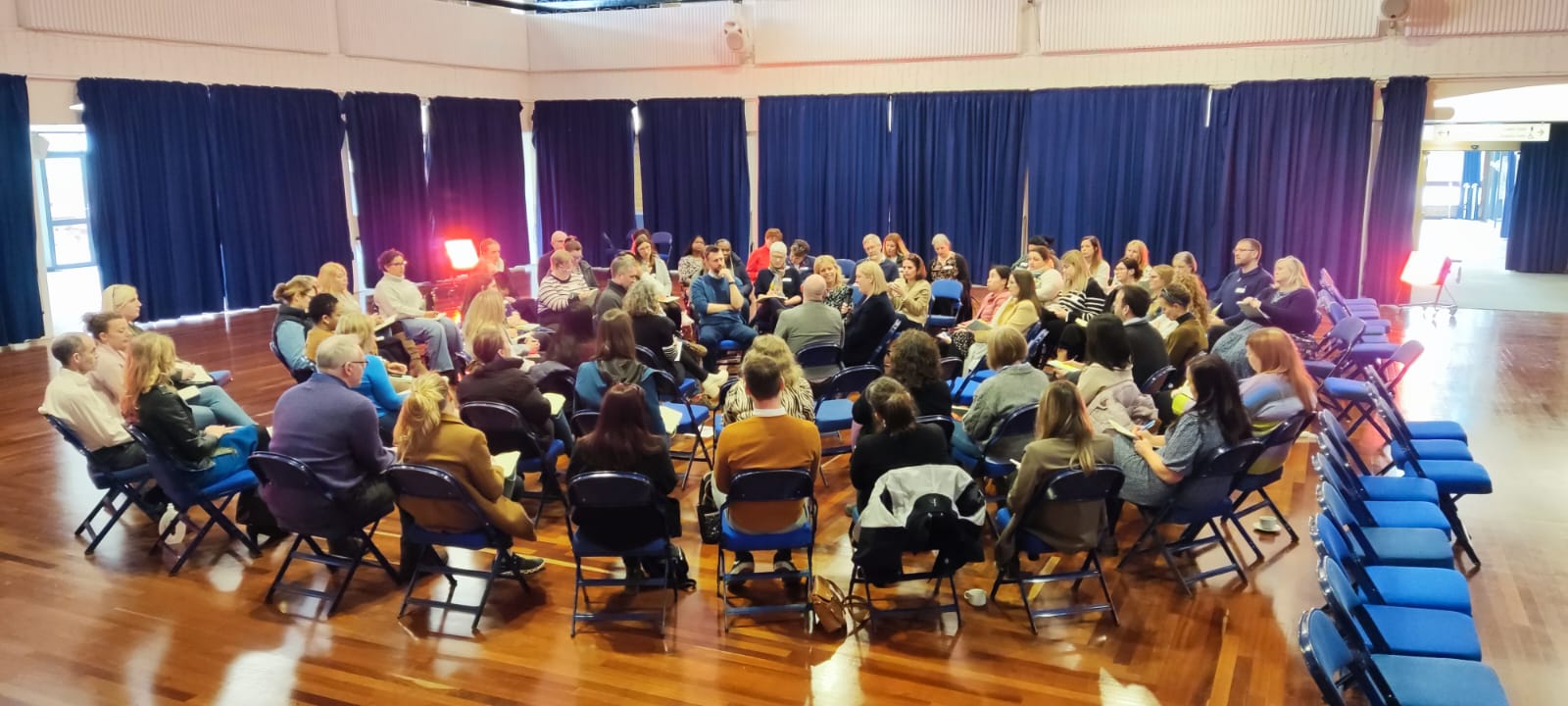
Working in partnership with the HT2040 Delivery Unit , we co-designed and co-facilitated three development workshops that enabled people with direct experience of these issues from across the system to work differently together. Each workshop featured a blend of insight and theory (drawn from focus groups, residents and system leaders), together with the application of CoCreate’s cutting-edge tools.
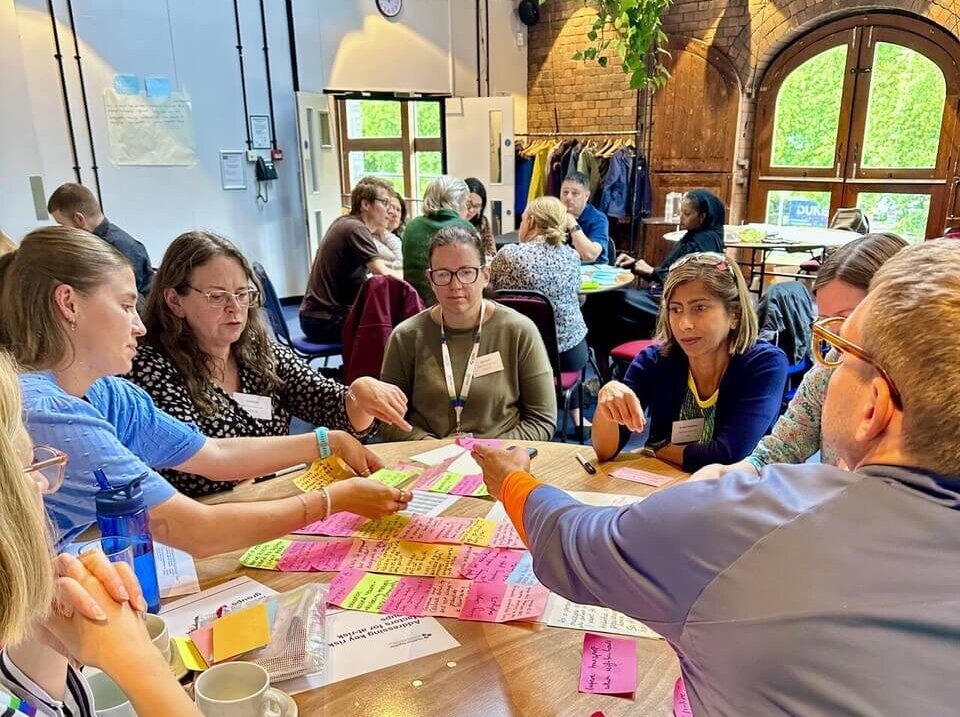
We designed the workshops around the following core methodologies:
- Workshop 1 – Three Horizons
Explored shared aspirations for the future, identified what needed to change in current provision, and aligned leaders on the role of innovation in creating progress. It generated a vision for the future and key outcomes we were trying to improve - Workshop 2 – Design Thinking
Designed around the real-life needs of people from BNSSG, enabling participants to break free from existing service constraints and generate new ideas and possibilities. Generated a set of proposals to test with the public through focus groups - Workshop 3 – Systemcraft
Examined the system’s capacity for change and identified leverage points – where and how the system would need to shift in order to support innovative new approaches. Created the plan for how the new model would be implemented.
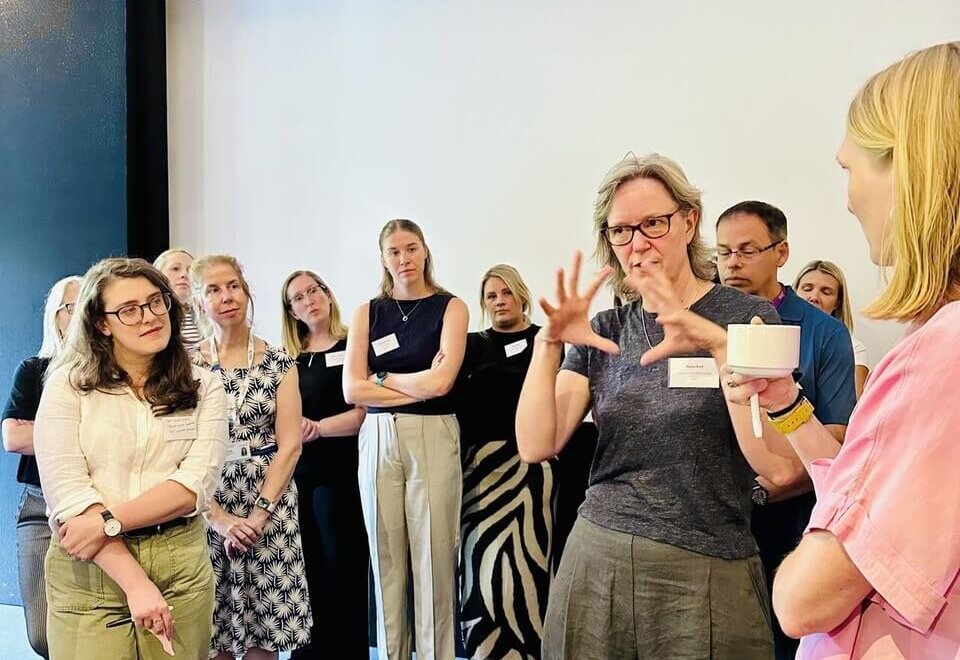
As part of this process, CoCreate also drew on our role leading the Collaborative Mindset module of McGill University’s International Masters in Health Leadership programme. We invited 50 global health leaders to review and critique the emerging strategic intentions for this population health need, offering best-practice insights from international health systems. This both broadened the team’s thinking and provided evidence and affirmation for key ideas.
Impact
The programme delivered a set of strategic intentions that are now being refined for system-wide adoption. These include:
- Putting people at the centre of any interaction with the health and care system
- Shared personal health plans,
- Community-based Living Hubs,
- Support for families, carers, and volunteers,
- New approaches to work, health and wellbeing.
These outputs were tested with residents and focus groups, and now been signed off to progress to implementation and embedding in nighbourhood health models and strategic commissioning.
Working with CoCreate enabled us to create the conditions for genuine collaboration across a really diverse group of professionals and experts. They brought tools and methods that enabled us to think differently and create a clear shared purpose to focus on how we can evolve to improve the lives the people living with multiple health needs. They were a genuine partner throughout, collaborating closely with us and providing the right balance of support, challenge and guidance. The approach has given us both a tested approaches to use again and detailed shared ambitions that means we are confident will make a real difference to this population.
Gemma self – programme director, healthier together 2040