


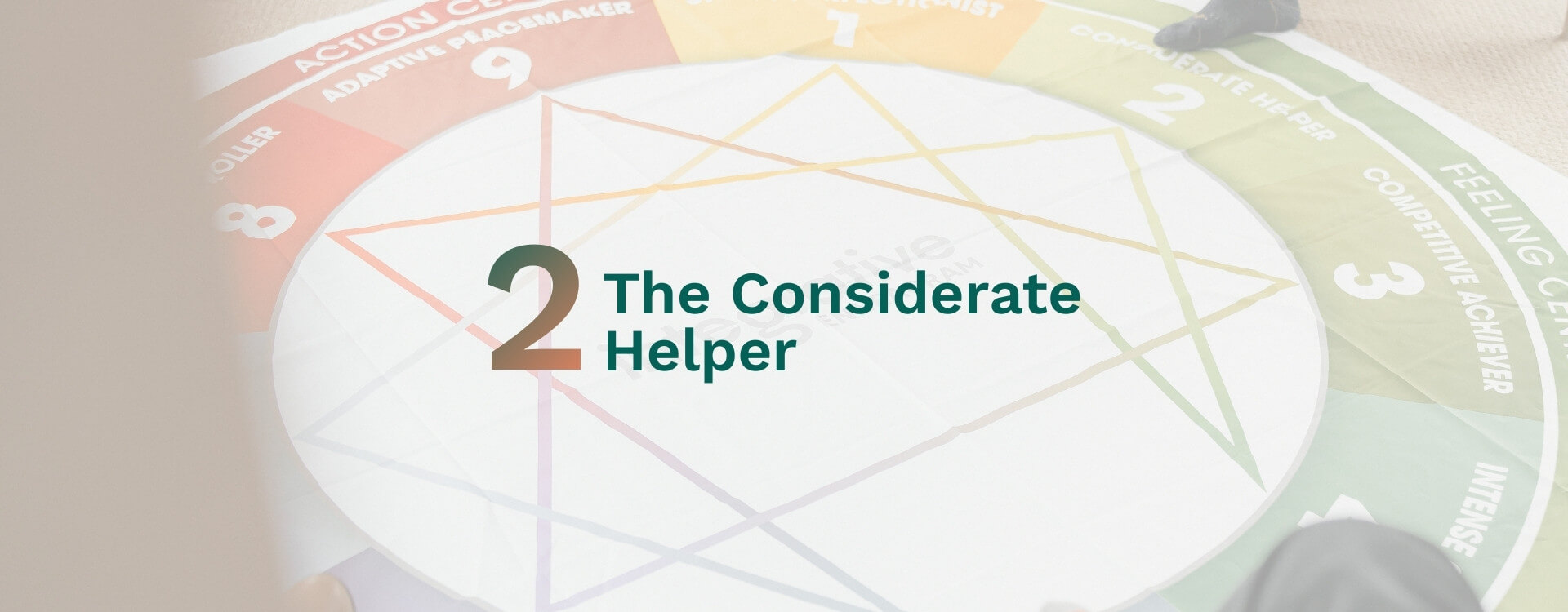
Enneagram 2 at Work: The Considerate Helper
Some leaders are driven by outcomes, others by ideas. Enneagram 2 is driven by people.
At work, Type 2 is motivated by connection, belonging and contribution. They want to feel valued and appreciated by people who matter to them, and they want their work to make a positive difference to others. This motivation gives them a powerful strength around empathy and relational intelligence, but it is also shaped by a core fear that often goes unspoken: being unwanted, unappreciated, or rejected.
What does Enneagram 2 look like at work?
Enneagram 2 shows up in organisations through relationships.
2s are highly attuned to the emotional environment. They notice tone, mood and subtle shifts in how people are relating to one another. They often pick up on needs before those needs have been clearly articulated.
They focus on people as much as the task, sometimes more. They invest time in checking in, building trust and creating inclusive environments where people feel valued. They are generous with emotional labour and often become informal sources of support within teams.
Because of this sensitivity, 2s are deeply affected by workplace culture. Environments with low psychological safety, high criticism or impersonal decision-making can be particularly difficult. Cultures where people are treated as assets rather than humans often leave 2s feeling disillusioned and drained.
Core Fear
The core fear of Enneagram Type 2 is being unwanted, unappreciated, or rejected. Beneath the warmth and helpfulness sits a quiet question: Am I liked? Do I belong? Who am I if I am not needed?
This fear is rarely conscious, but it drives how 2s show up at work. They are attentive, supportive and generous with their time. As leaders, they bring warmth, encouragement and a strong focus on getting the best out of others. In teams, they help people feel included, seen and cared for.
Under pressure, however, this same drive can create blind spots. Enneagram 2s may give too much, neglect their own needs, or struggle to set boundaries. When appreciation is missing, resentment can build, sometimes leading to reactive behaviour that surprises others.
Understanding this pattern is key to working effectively with Enneagram Type 2.
Motivations
What motivates Enneagram 2 at work is contribution through relationship. 2s want to know that what they do matters to others. They are energised by roles where they can support, develop and bring people with them. Their motivation is often relational rather than transactional.
They tend to excel in environments that require emotional intelligence, empathy and care. 2s are often the leaders who keep people together through change, who notice when morale drops and who work hard to maintain connection over time.
What drains them is work that repeatedly harms people without space to acknowledge the impact. Roles focused purely on delivery, reduction or efficiency, without care for the human cost, can be emotionally exhausting.
Strengths
At their best, Enneagram 2s are deeply relational leaders.
As leaders, they are supportive, encouraging and attuned to what people need in order to perform well. They build trust quickly and are often experienced as approachable and caring. Their empathy helps people feel understood, which in turn boosts engagement and confidence.
In teams, Type 2s are often the emotional glue. They help people feel included, smooth tensions and maintain a sense of belonging. Their presence can be especially valuable during periods of uncertainty or change.
When 2s combine care with clarity and decisiveness, they can be highly effective leaders who move work forward while keeping people on board.
Weaknesses under stress
Under stress, the strengths of Enneagram 2 can start to work against them.
Because Type 2s want to be liked and appreciated, they can fall into people-pleasing or subtle manipulation. This is rarely intentional. From the 2’s perspective, they are simply trying to help. Others may experience it as intrusive or disempowering.
2s can also overstep. Their ability to read people may lead them to offer advice, intervene or rescue too quickly. What begins as care can turn into meddling, undermining others’ autonomy.
When 2s give and give without acknowledgement, resentment can build. At that point, they may become more direct or reactive, surprising those who have experienced them as consistently warm and supportive.
A pattern that we frequently observe in Enneagram 2s is that they become sick at the moment when they finally arrive at their well-earned break or holiday. Learning to avoid this ‘boom and bust’ cycle is a key development pathway for the 2.
Enneagram 2 in conflict: how do they respond?
For Enneagram 2, conflict is rarely neutral. Type 2s are highly attuned to relational rupture, so their instinct is often to preserve harmony. They may soften feedback, delay difficult conversations or prioritise the relationship over clarity. In the short term, this can be stabilising. In the longer term, it can mean important issues go unspoken.
Under stress, this avoidance can flip. When Type 2s feel unappreciated or taken for granted, conflict may surface suddenly and emotionally. What others experience as reactivity is often the release of frustration that has been building quietly for some time.
Learning to address tension earlier, before resentment accumulates, is a key leadership discipline for this type.
Enneagram 2 in teams and professional relationships
In team settings, 2s often act as emotional anchors. They notice how people are doing, help others feel welcome and bring humanity into the work. This contribution is often invisible but deeply felt.
The challenge is knowing when to step back. Genuine empowerment sometimes requires resisting the urge to help. One of the most useful questions for 2s is simply, “Am I actually needed here?”
Clarity matters. Naming expectations explicitly helps prevent misunderstandings and reduces unspoken pressure.
We see this dynamic clearly in our work with senior Enneagram Type 2 leaders.
One Chief People Officer we worked with in a large global organisation was navigating a major restructure. Reporting lines had changed and, over time, she began to feel undervalued and marginalised, while still carrying a strong sense of responsibility for her people.
Through coaching and using the iEQ9, she was able to step back and take a more objective view of her role in the new structure. Rather than interpreting the situation solely through her relational lens, she began to clarify her own needs, recognise where her influence still lay and identify where it was no longer helpful for her to step in.
This enabled her to have a clear and candid conversation with the global CEO about her role and expectations. It also allowed her to let go of aspects of her previous position and trust others to step into that space, rather than continuing to mediate or protect.
For her, this shift towards greater assertiveness and objectivity was both enabling and freeing. It reduced frustration, strengthened her impact, and opened up space for creativity and renewed energy in her leadership.
Enneagram 2 jobs: what roles and leadership contexts suit this type?
Enneagram 2 often thrives in jobs where caring for people is central. They are well suited to HR, learning and development, organisational leadership, sales and relationship-led roles. They can also be highly effective in nursing, coaching, therapy, healthcare, social care and other helping professions.
2s can make strong senior leaders when they balance relational leadership with decisiveness. Highly transactional or cutthroat environments tend to be exhausting for this type, especially where success comes at the expense of people.
How to work effectively with Enneagram 2
When working with Enneagram Type 2, relationship matters.
Acknowledging the person before moving straight to the task helps 2s feel seen and engaged. Appreciation is important, particularly when it is specific and grounded rather than general.
Clarity is equally essential. 2s cope better with direct, respectful communication than with ambiguity. When feedback is needed, being clear about expectations and impact is far more effective than softening the message to avoid discomfort.
If a 2 is taking on too much, naming this early and framing it as support rather than criticism can prevent burnout. In moments of emotional reactivity, staying calm and naming what you observe often helps the 2 regain balance quickly.
Growth and development for Type 2 leaders
Growth for Enneagram Type 2 leaders starts with honesty about their own needs.
Learning to say no, setting boundaries and becoming more emotionally honest are essential. 2s grow by developing assertiveness, engaging with conflict earlier and separating their worth from being needed.
As they do this, their empathy becomes a stabilising leadership strength rather than a source of exhaustion.
Enneagram 2 subtypes at work
- Social 2s focus on helping groups and organisations and often gravitate towards senior roles where they can influence culture.
- One-to-One 2s focus on individual connection and can be charismatic and influential change agents.
- Self-Preservation 2s are more cautious and reserved, expressing helpfulness in quieter ways.
All three share the same core motivation, but they can look very different day to day.
When Type 2 shapes organisational culture
A healthy Enneagram Type 2 culture feels inclusive, caring, and purpose-driven. People feel valued and connected to the mission.
When unbalanced, it can become overly needy or emotionally charged. Care without clarity can lead to confusion or subtle manipulation. Strong cultures balance warmth with accountability and direction.
Drive change with the iEQ9 Enneagram
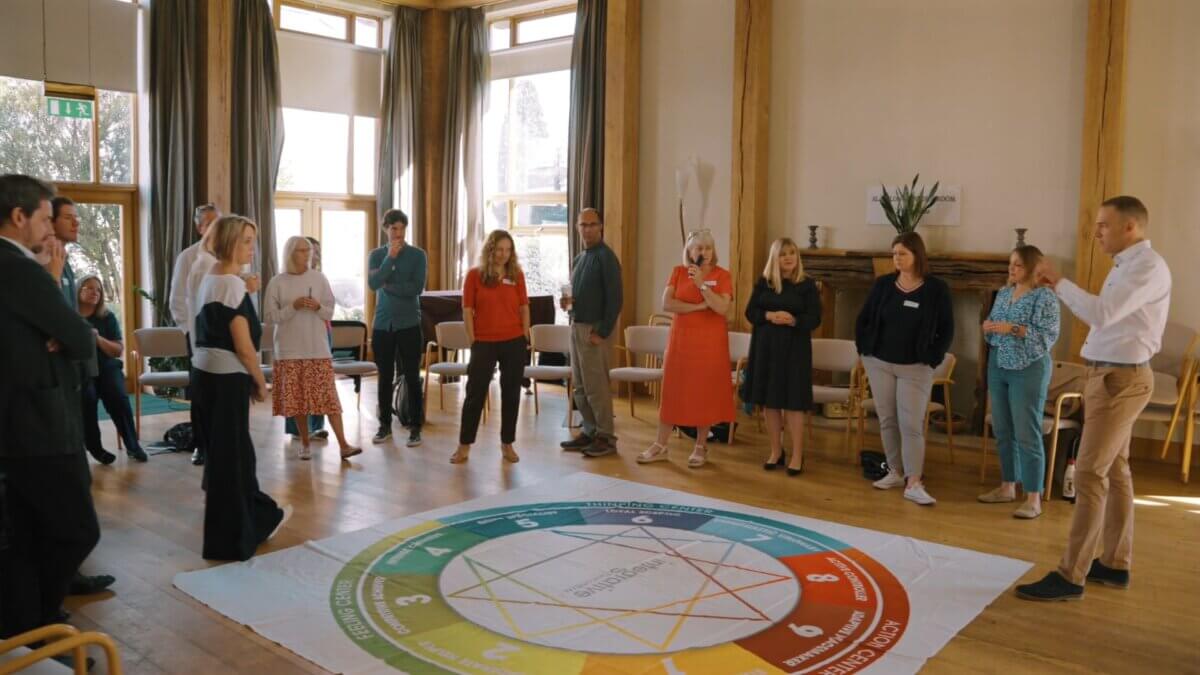
CoCreate is the UK’s largest and most experienced iEQ9 Enneagram provider for businesses.
We work with Enneagram Type 2 leaders across sectors, supporting senior leaders, teams and organisations through coaching and leadership development.
Discover our Enneagram services for business leaders and teams.
Want to continue exploring the Enneagram?
If you want to learn more about the Enneagram, each of the types or how you can harness the power of the Enneagram, here are some resources you might find useful:
If you would benefit from a coaching conversation, want to understand your Enneagram type more deeply, or are curious about how the Enneagram can accelerate team performance, get in touch.