



How to overcome Immunity to Change
Many people set goals with good intentions and yet struggle to follow through on them. Whether it is getting fitter, changing habits, or leading change at work, the gap between what we aspire to and what we actually do is a familiar and frustrating one.
This pattern shows up clearly in our personal lives, but it appears just as strongly in organisations. Billions are invested globally in leadership development, transformation programmes and culture change initiatives every year. And yet, only a small proportion of leaders report that these efforts lead to meaningful, sustained business impact. Something is clearly getting in the way.
This article explores how to overcome immunity to change. Not by offering more motivation, better goal setting or sharper performance management, but by addressing the deeper forces that quietly resist change, often without us realising it. These forces operate at an individual, leadership and system level. If they are not named and worked with, change will continue to stall, no matter how compelling the strategy looks on paper.
Why change is so hard, even when we want it
When change fails, it is often explained away as a lack of motivation, commitment or discipline. This explanation is comforting because it suggests that trying harder will fix the problem. In reality, decades of organisational research suggest otherwise.
Across sectors, research into leadership and management development has consistently shown how difficult it is to translate learning into sustained behaviour change at work. Leaders leave programmes energised, reflective and clear about what needs to be different. And yet, within weeks of returning to their organisations, familiar pressures, incentives and ways of working pull them back into old patterns. The system absorbs the individual, and very little changes.
The uncomfortable truth is this: wanting change is not enough. In many cases, it is not even the main issue. The real problem is that something else is pulling just as hard in the opposite direction.
What Is Immunity to Change?
Immunity to change is a concept developed by Robert Kegan and Lisa Lahey, who used it to describe why individuals and organisations so often fail to follow through on change, even when they are genuinely committed to it.
At its core, immunity to change refers to the internal, often unconscious forces that prevent us from changing, even when we want to. These forces operate like a self-protecting system, quietly working to maintain stability and avoid perceived loss.
Former Arsenal manager Arsène Wenger once described his team’s poor performance as trying to drive with their foot on the accelerator while the handbrake was still on. Immunity to change works in much the same way. We push harder, set clearer goals, apply more pressure, and yet progress remains limited.
The handbrake is made up of competing commitments, worries, and assumptions that sit beneath the surface. These forces are rarely malicious. In fact, they are often doing something useful, such as protecting identity, relationships, reputation or a sense of competence. The problem is that when they go unexamined, they also block growth.
Until these hidden commitments and assumptions are recognised and worked with, effort alone will never be enough.
How Immunity to Change shows up in individuals and organisations
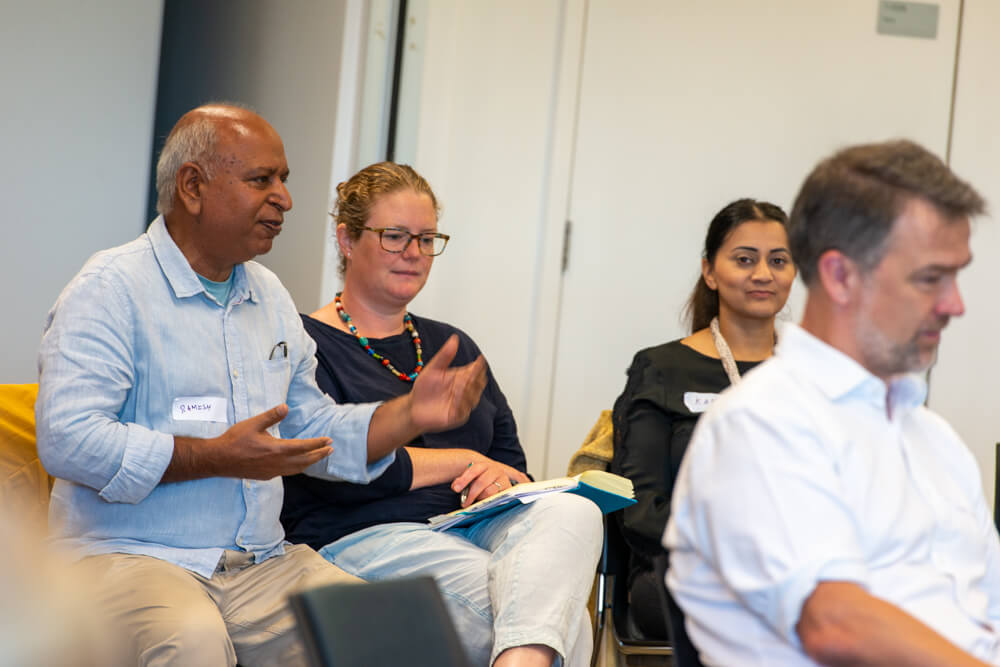
At an individual level, immunity to change often looks like procrastination, self-sabotage or repeatedly failing to follow through on the same goals. People know what they should do, and yet somehow do not do it.
At an organisational level, the pattern is strikingly similar. Change initiatives stall or quietly fade away. Responsibility for change is delegated without authority or ownership. Leaders agree publicly while resisting privately. Structures, incentives and ways of working pull in the opposite direction to the stated strategy.
People do not resist change because they are difficult or disengaged. They resist because change threatens something that matters to them. The same is true of systems.
Competing commitments: the hidden barriers to change
Every change goal competes with other commitments.
You may want to get healthier while also being deeply committed to comfort, routine and social connection. You may want to lead more boldly while also being committed to staying liked, avoiding conflict or protecting your reputation.
These competing commitments are rarely named out loud. They sit beneath the surface, shaping behaviour far more powerfully than goals, values or performance objectives. Until they are surfaced and explored, change efforts will continue to stall, no matter how well intentioned they are.
This is often where leaders get uncomfortable. It is far easier to redesign a process than to acknowledge that part of us is invested in keeping things exactly as they are.
Signs you may have an immunity to change
You may have an immunity to change if you repeatedly:
- Set the same goals without lasting success
- Make progress briefly and then revert to old habits
- Feel resistance even when the goal genuinely matters to you
- Rationalise delay or timing issues
- Lower the ambition of the goal rather than change behaviour
- Feel defensive, frustrated or drained when change is discussed
These are not character flaws. They are signals. They point to something important that is being protected.
Why willpower and motivation do not create lasting change
Willpower alone cannot overcome immunity to change because willpower is already being used.
Often, it is being used to protect identity, relationships, comfort or a sense of competence. Change is rarely neutral. It challenges who we believe we are, how others see us or how safe and in control we feel.
This is why people resist loss more than they resist change. If the loss remains unexamined, no amount of motivation, incentives, or accountability will be enough to sustain new behaviour.
How to overcome immunity to change
So if willpower alone isn’t enough, how can you actually overcome immunity to change? Here are five practical steps to break down the hidden barriers that hold change back.

Step 1: Make resistance to change visible
The first step in overcoming immunity to change is to make the resistance visible.
Start with a simple but honest audit.
- What am I doing, or not doing, that is getting in the way of this change?
- Where do I hesitate, soften, avoid, delay or stay silent?
- How am I getting in my own way?
This is not about judgement or self-criticism. It is about clarity. Until resistance is visible, it cannot be worked with.
Next, identify the competing commitments underneath. These might include commitments to staying comfortable, keeping the peace, avoiding failure, maintaining control or being seen as competent. Naming them reduces their power and creates space for choice.
Step 2: Identify and question limiting assumptions
Once resistance is visible, the next step is to explore what sits underneath it.
Competing commitments are almost always underpinned by assumptions or worries. These might sound like:
- if I speak up, it will damage my reputation;
- if I challenge this, I will lose influence;
- I am not the kind of person who can do this;
- if this fails, it will confirm my doubts about myself.
These assumptions often feel true. They are also rarely tested.
This is where the work of Byron Katie becomes particularly powerful. Her process, known as The Work, invites us to slow down and ask deceptively simple but deeply challenging questions. Is this belief true? Can I know for certain that it is true? Who would I be without this belief?
The aim is not positive thinking or reassurance. It is rigour. Many of the assumptions holding change in place turn out to be stories we have rehearsed internally for years, rather than facts we have ever tested in the real world.
Leaders often discover that what they are most afraid of has never actually happened. It has simply been imagined often enough to feel inevitable.
Step 3: Run small experiments instead of big changes
Once assumptions have been surfaced and questioned, the next step is to test new behaviour in practice.
This is where agility really matters.
Large, rigid change goals often increase resistance. They feel risky, identity-threatening and unforgiving. Small experiments, by contrast, reduce the psychological cost of change. They allow leaders and teams to learn without overcommitting or overexposing themselves.
There is a reason agility features so prominently in leadership conversations today. Research from Heidrick & Struggles shows that 93% of executives agree agility is critical to business strategy, and 94% say it is critical to new ways of working.
Agility is not about moving fast for the sake of it. It is about taking small, low-risk steps, learning from what actually happens and adapting based on evidence rather than assumption.
Instead of asking, “How do I make this change stick forever?”, a more useful question is, “What is the smallest action I could take to test this assumption?” Five minutes of action often creates more learning than hours of planning. One experiment can loosen a belief that has been holding change in place for years.
Step 4: Reduce friction and make change easier
Change is shaped as much by environment as by intention.
Reducing friction makes the desired behaviour easier to do. This might involve building a short feedback moment into an existing meeting, reflecting briefly after opening your calendar or preparing in advance to remove barriers to action.
Habit stacking, linking a new behaviour to an existing routine, helps change stick without relying on heroic levels of motivation. The question is not “How committed am I?”, but “How easy have I made this to do when things get busy?”
Step 5: Build support, accountability and leadership allies
Overcoming immunity to change is not a solo act, no matter how senior or capable you are.
Change requires vulnerability, connection and accountability. When intentions are shared, support becomes possible. When commitments are visible, follow through increases.
Leaders often underestimate how much credibility they gain by admitting they are working on something difficult. Asking for support does not weaken authority. It humanises it.
It is no coincidence that in her seminal work on what creates psychological safety, Amy Edmondson found that senior leaders acknowledging their own fallibility was critical to creating a genuine learning environment. When leaders admit they do not have all the answers, that they are experimenting, learning, and sometimes getting it wrong, they give others permission to do the same.
Psychological safety is not created by reassurance or positivity. It is created when people see those with power modelling curiosity, humility, and accountability. In that sense, working openly with your own immunity to change is not a personal development exercise. It is a leadership act that shapes how learning, risk and change are experienced across the system.
How organisational systems create Immunity to Change
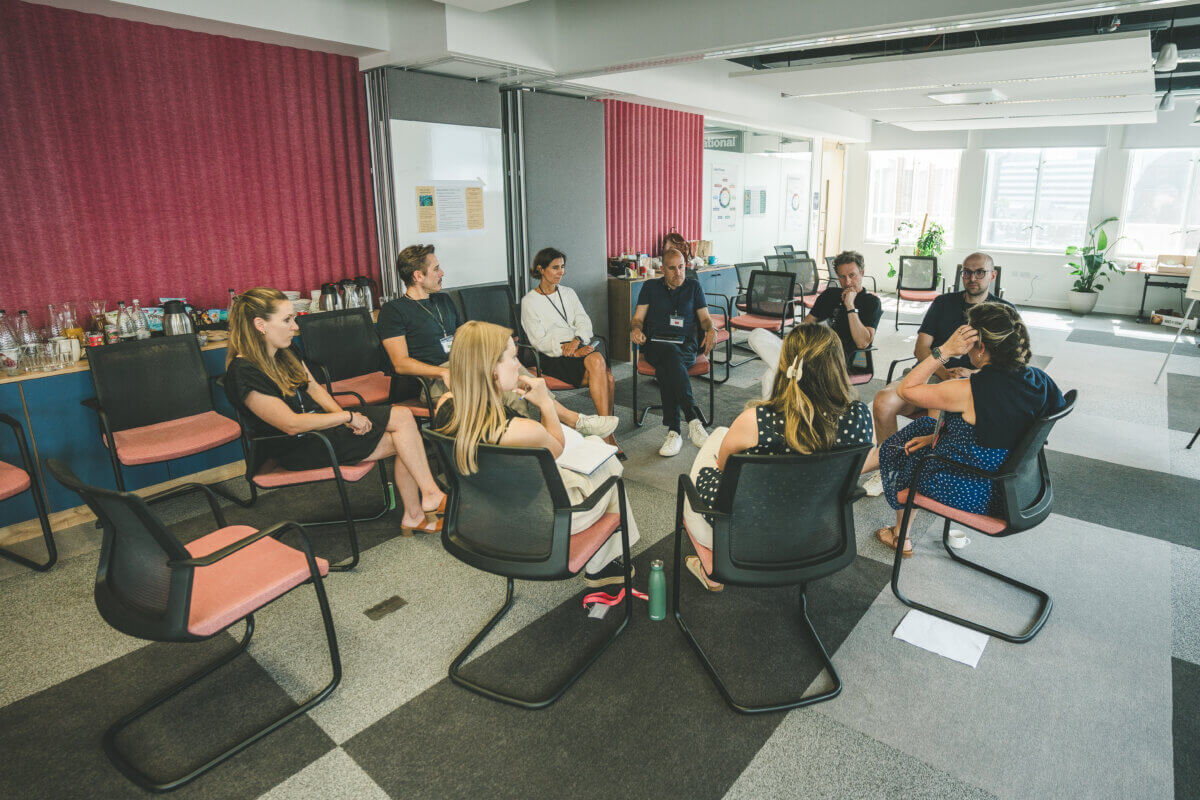
Individual resistance is only part of the story. Organisations themselves can develop a powerful immunity to change.
In many ways, organisations are more like people than we realise. No system is truly broken. If it were, it would no longer exist. Instead, systems persist because they are delivering benefits to someone, somewhere, even if those benefits come at a cost to others.
This is why change initiatives so often stall. The system is not failing. It is doing exactly what it has been designed, consciously or unconsciously, to do.
Every organisational system distributes power, resources, risk and reward in particular ways. Those who benefit from the current design are often the least motivated to change it. This creates a collective immunity to change that mirrors the individual version.
At CoCreate, we work with approaches such as Systemcraft to examine immunity to change at a macro level. This allows leaders to step back from individual behaviour and examine the system itself by asking difficult but necessary questions. Who are the key stakeholders in this system? How has the system evolved over time, and why? Who is the system currently working for, and who is it not?
From here, leaders can begin to assess the system’s capacity to change. Rather than forcing transformation, they can identify windows of opportunity where small, well-placed experiments allow the system to learn and adapt.
Just as with individuals, sustainable organisational change comes not from pressure, but from insight and experimentation.
Self-awareness, systems thinking, and the limits of power
Overcoming immunity to change is not just a technical challenge. It is a leadership one.
As Brené Brown has argued, who you are is how you lead. Without a significant degree of self-awareness and systems thinking, leading meaningful change becomes extremely difficult.
Leaders are often operating under intense pressure, with serious goals, high stakes and significant complexity. Getting a group of people to move in the same direction with clarity and purpose under those conditions is an extraordinary challenge.
It can be done in the short term through power and fear. Performance can be squeezed. Growth can be forced. But this approach rarely leads to lasting change.
Long-term, meaningful change depends on intrinsic motivation, trust and shared ownership. That requires leaders to understand how they themselves are getting in the way. Many would rather redesign the organisation than confront their own assumptions and blind spots. And yet, without that work, resistance simply reappears in a different form.
Leadership credibility today comes not from certainty or control, but from curiosity, learning and the willingness to be changed by the work.
From good intentions to sustainable change
Overcoming immunity to change is not about trying harder. It is about looking deeper.
Sustainable change starts beneath the surface, with honesty about what is really getting in the way. Progress comes from making resistance visible, questioning assumptions, running experiments and building support.
For leaders, this is not optional. The ability to work with resistance, rather than deny it, is what turns good intentions into real, lasting change.
At CoCreate, we support leaders and organisations to surface hidden resistance, challenge limiting assumptions, build agility through experimentation and work with systems rather than against them. If you are serious about creating sustainable change in yourself, your team or your organisation, we would welcome a conversation.