



Enneagram 5 at Work: The Quiet Specialist
If you are an Enneagram 5 or you work with one, this will feel familiar.
Work is rarely just about output for a Type 5. It is about understanding. What’s really going on here? How does this system work? What do I need to know in order to feel oriented, competent and safe?
Enneagram Type 5, often called The Quiet Specialist, shows up at work as curious, observant, thoughtful and intellectually engaged. They participate primarily through listening, thinking and making sense of complexity. This is not because 5s are disengaged or uninterested in people, but because they are deeply motivated to conserve resources – time, energy, attention – and to create safety through understanding.
At their core, 5s are driven by a powerful belief: I am the creator of my own safety. Knowledge, preparation and clear boundaries are how they navigate the world.
What does Enneagram 5 look like at work?
Enneagram 5 brings depth, focus and perceptual clarity into their working lives.
They are highly observant. 5s notice patterns, inconsistencies and nuances others miss, often holding a rich inner picture of what is really happening beneath the surface. They tend to listen more than they speak, and when they do contribute, it is usually considered and precise.
As a head type, Enneagram 5s lead from thinking. They want to understand before acting and are uncomfortable being put on the spot. Surprises are deeply unsettling; preparation creates safety. Many 5s are voracious learners, with multiple books or areas of inquiry on the go at once – not because they are restless, but because the world is endlessly fascinating to them. 5s are rarely bored.
5s tend to compartmentalise. Different parts of life – work, relationships, interests, inner world – are held in distinct mental boxes. This helps them manage energy and avoid overwhelm, but it can also make them feel separate or hard to read.
They can be present in groups, and sometimes even at the centre or “on stage”, when there is a clear role or purpose. Without that, they often prefer the periphery. Unstructured social interaction, networking events or “cocktail party” dynamics are usually draining rather than energising.
Many Type 5s create sanctuaries. This might be their home, a particular room, or even a specific desk or chair – this is my space. Boundaries matter. Intrusion, especially unexpected intrusion, can feel overwhelming.
Hybrid working has been a gift for many 5s. The screen offers a comfortable boundary through which to engage, reducing social drain and allowing them to work from the sanctuary of home. For some, not having to be in the office every day has made it much easier to manage energy and participation.

Core Fear
At the heart of Enneagram 5 is a core fear of being overwhelmed, depleted or invaded.
5s often carry a deep concern that their inner resources are limited and could be exhausted by demands, expectations or emotional intensity. The world can feel intrusive, and withdrawal becomes a way of staying safe.
This fear helps explain why Type 5s are the most isolated type on the Enneagram diagram. Distance creates containment. Understanding creates control.
It also explains why emotions are often processed privately. Feeling is not absent – it is simply experienced internally rather than relationally, where it can feel harder to manage.
Motivations
Enneagram 5 is motivated by clarity, autonomy, competence and self-sufficiency.
They want to understand how things work and to feel capable in their role. Wisdom – making sense of the world – is deeply valued and objectivity often feels safer than emotional entanglement.
They are motivated to conserve resources. This is not about acquiring more, but about holding onto what they already have. Time, energy and attention are precious. Once boundaries feel secure, Enneagram 5s can be warm, generous and engaged.
5s prefer predictability. They like to know what is expected and what is coming. Sudden demands, ambiguity or emotional pressure can trigger withdrawal.
Interestingly, many 5s are genuinely happy being a 5. They often wonder what the problem is: why would I want to be anything else? As a result, they can be less immediately interested in growth paths that feel like dilution rather than deepening.
Strengths
At their best, Enneagram 5 brings insight, depth and objectivity.
They are highly perceptive. Type 5s offer in-depth, thoughtful observations of complex situations and information.
They are curious and intellectually engaged. Their appetite for learning enables them to build deep expertise across fields, topics and theories.
They are self-sufficient. Once expectations are clear, 5s work independently and reliably, requiring little oversight.
They are knowledge sharers. While they may struggle to share themselves, Enneagram Type 5s are often generous with information, insight and expertise once trust is established. CoCreate was part of a knowledge-sharing network with other Enneagram enthusiasts and the 5 in the group was by far the most active, sharing regularly with the wider community.
They bring calm to complexity. In uncertain situations, their capacity to step back, think clearly and avoid reactivity can stabilise teams.
Type 5s are steady, considerate and personable, not aloof or detached. When boundaries are respected, 5s can be excellent and well-liked team players.
Weaknesses under stress
Under pressure, Enneagram 5’s strengths can turn inward.
5s may withdraw too far – physically, emotionally or relationally – cutting themselves off from support. They can become inaccessible or overly private.
They may struggle to notice relational signals. Emotional cues, shifts in tone or unspoken expectations can be missed, not out of lack of care, but because they are not obvious and haven’t been made explicit.
Compartmentalisation can become rigid. Parts of life remain separate when integration is needed.
There can also be a tendency to hoard energy or withhold full participation – sharing knowledge freely, but holding back presence, vulnerability or commitment.
Some 5s experience the Enneagram itself as intrusive. We’ve seen 5s (particular self-preservation 5s) react strongly to assessment questions, experiencing them as an invasion of privacy or a challenge to the guardrails they rely on for safety. Talking about type publicly can feel exposing rather than enlightening.
Enneagram 5 in conflict: how do they respond?
Conflict is uncomfortable for most 5s.
They tend to step back to think rather than engage immediately. This can look like avoidance, when instead it is an attempt to understand what is happening and how to respond competently.
Emotional conflict is particularly challenging. Enneagram 5s often need feelings and expectations to be named clearly so they can orient themselves.
If pressure increases, 5s may disengage entirely, retreating into solitude or intellectualisation as protection.
Enneagram 5 in teams and professional relationships
In teams, Enneagram 5s often contribute depth rather than volume.
They may speak less, but when they do, it is usually precise and considered. They prefer meaningful contribution over constant participation.
They are happiest in groups with a clear purpose and defined roles. Without structure, they may fade into the background.
In relationships, Type 5s value trust and respect. They often find it easier to share information than personal experience. Boundaries are essential, and paradoxically, the stronger the boundaries, the more open a 5 can be.
Some 5s camouflage socially – appearing confident, articulate or engaging as a way of protecting themselves and maintaining distance.
Enneagram 5 jobs: what roles and leadership contexts suit this type?
Type 5s often thrive in roles involving research, analysis, strategy, technology, policy, design, systems thinking and specialist expertise.
They do best where:
- deep focus is valued
- independence is respected
- preparation matters
- thinking time is protected
They flourish in environments where self-expression and authenticity are seen as essential to success rather than distractions.
Highly interrupt-driven, emotionally intense or socially demanding environments can be exhausting unless boundaries are clear.
How to work effectively with Enneagram 5
Growth and development for Type 5 leaders
Growth for Enneagram 5 centres on participation.
Rather than withdrawing when resources feel low, growth involves staying present – trusting that something will be there even when the tank feels empty. The sense of scarcity is often an idea rather than a reality.
Key growth edges include:
- Decompartmentalising – letting different parts of life mix
- Testing the belief that resources are limited
- Sharing more of self, not just knowledge
- Noticing that engagement can generate energy rather than drain it
At higher integration, Type 5s move toward Eight in healthy ways: inhabiting the body, accessing healthy anger, setting boundaries clearly and acting with confidence and authority.
They also integrate aspects of Seven by allowing ideas to move into the world – socialising insights, exploring breadth as well as depth, and expressing themselves more externally.
The virtue of Enneagram 5 is non-attachment – discovering that understanding the world is actually enhanced by participating in it.
Enneagram 5 subtypes at work
Enneagram Type 5s express their core patterns differently depending on instinct.
- Self-Preservation 5s are the most boundaried and withdrawn. Highly sensitive to intrusion, they protect time, space and energy fiercely. Once boundaries are secure, they can be warm and generous.
- One-to-One 5s are more expressive and passionate. They seek deep trust with a confidant and may appear more outwardly engaged or creative. Emotional intensity runs beneath a quiet exterior.
- Social 5s engage through shared knowledge and expertise. They often contribute significantly through teaching, advising or thought leadership, while remaining personally private.
When Type 5 shapes organisational culture
At its best, a Type 5 culture is thoughtful, reflective and intellectually rigorous. Decisions are informed rather than reactive. Depth and expertise are valued.
At its worst, it can become detached, overly theoretical or disconnected from lived experience. Too much withdrawal can limit collaboration and momentum.
Healthy cultures balance 5 insight with participation and relational presence.
Drive change with the iEQ9 Enneagram
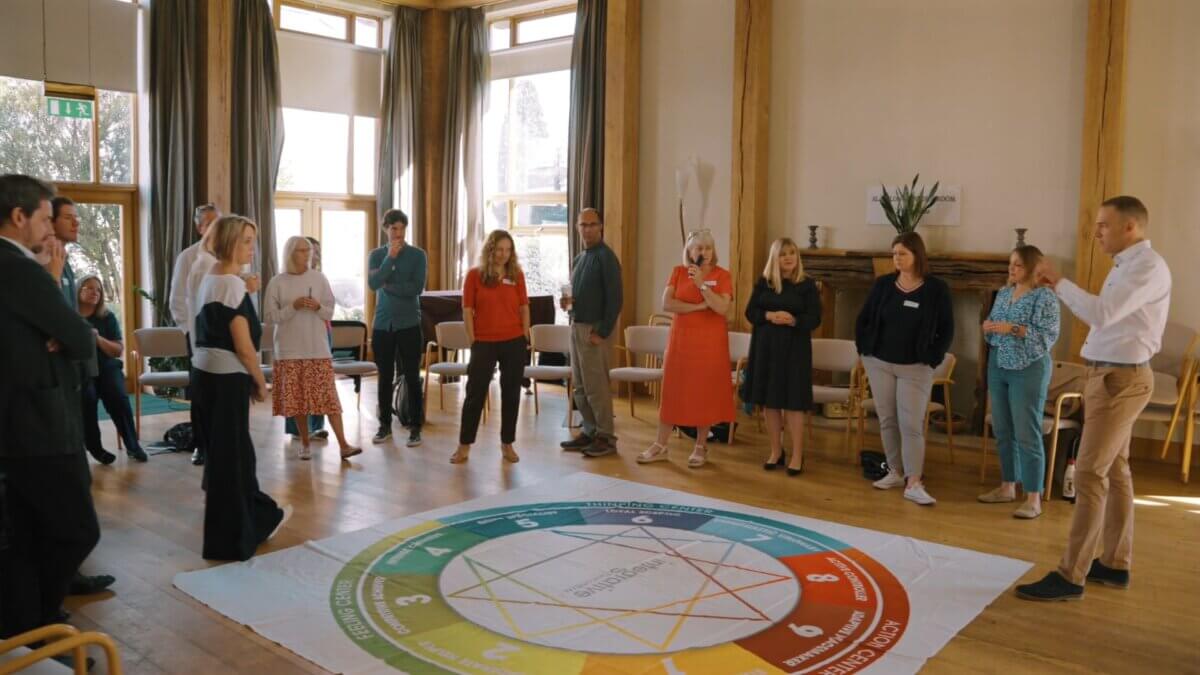
CoCreate is the UK’s largest and most experienced iEQ9 Enneagram provider for businesses.
We work with Enneagram Type 5 leaders, alongside all other types, across sectors, supporting senior leaders, teams and organisations through coaching and leadership development.
Discover our Enneagram services for business leaders and teams.
Want to continue exploring the Enneagram?
If you want to learn more about the Enneagram, each of the types or how you can harness the power of the Enneagram, here are some resources you might find useful:
If you would benefit from a coaching conversation, want to understand your Enneagram type more deeply, or are curious about how the Enneagram can accelerate team performance, get in touch.