



Enneagram 6 at Work: The Loyal Sceptic
If you are an Enneagram 6 or you work with one, this will feel familiar.
Work is rarely neutral for a Type 6. It is a place where safety, trust, responsibility and belonging are constantly being assessed. Who can I rely on? What might go wrong? Are we prepared? Who has this if things fall apart?
Enneagram Type 6, often called the Loyal Sceptic, shows up at work as the person scanning the horizon. They are stress-testing plans, questioning assumptions and watching the dynamics in the room. This is not because they are negative or difficult, but because they are deeply motivated to keep themselves and others safe.
At their core, 6s are driven by a simple but powerful need: to be safe and to belong. When this need is met, Enneagram 6 becomes one of the most loyal, courageous and committed contributors in any organisation – a brilliant and loyal team player.
What does Enneagram 6 look like at work?
Enneagram 6s bring vigilance, responsibility and foresight into their working lives.
They are natural troubleshooters, problem-solvers and problem seekers. They do not just solve the problem in front of them; they look for the problem that hasn’t happened yet. Their attention is drawn to risk, gaps, unintended consequences and blind spots. They ask a lot of questions – often more than others think are necessary.
This questioning is not about undermining. It is about preparation. 6s are excellent at mentally playing things out in advance. If this fails, then what? If that person leaves, what’s the backup? If the system goes down, what’s Plan B? Because of this, many Type 6s are calm under pressure. When a crisis hits, they are often already holding a ready-baked plan.
One colleague we work with, a clear Enneagram 6, will typically ask more questions ahead of a development session than all our other colleagues combined. It could feel slightly irritating in the moment. And yet it means the work lands exceptionally well. The team is prepared, contingencies are covered and people feel looked after. Her loyalty, care and team-orientation are highly valuable.
6s are also highly sensitive to power dynamics. They notice who holds authority, how it is exercised and whether it can be trusted. They track shifts in loyalty, tone and behaviour. When they feel safe, this awareness makes them strong contributors to team culture and cohesion.

Core Fear
At the heart of Enneagram 6 is a core fear of being abandoned and alone in an unsafe world.
This fear often shows up as distrust – not because 6s want to be suspicious, but because trusting the wrong person feels dangerous. Many 6s carry a quiet internal question: Who can I really rely on?
This fear drives their focus on preparation, responsibility and reliability. It also explains why it can be deeply painful to tell a 6 they “don’t have a grip on things.” Competence and preparedness are not just skills; they are part of how a 6 manages anxiety and stays grounded.
When trust is broken, the impact can be profound. 6s do not give loyalty lightly, but when they do, they give it fully. Inconsistency, unreliable leadership or perceived betrayal can quickly activate fear (the 6’s vice) and reactivity.
Motivations
Enneagram 6 is motivated by safety, clarity, reliability and belonging.
They function best in environments that are consistent, predictable and rational. Clear roles, transparent decision-making and trustworthy leadership help calm the 6’s nervous system. When these are missing, anxiety increases and thinking can spiral.
Type 6 values responsibility. There is often a strong internal stance of: I will carry this properly, and I need to know others will do the same. They expect reciprocity from the team and can become frustrated when responsibility feels unevenly held.
They want to know where they stand. Ambiguity is not just uncomfortable for a 6; it can feel threatening. Clear expectations and honest communication matter more than optimism or reassurance.
Their intuition is often underestimated. 6s are intuitive not because they are dreamy or abstract, but because they have strong pattern recognition, foresight and awareness of context.
Strengths
At their best, Enneagram Type 6s bring devotion, courage and steadiness.
They are deeply loyal to people and causes they trust. Once committed, they show up consistently and stand by the team through difficulty.
They are prepared and risk-aware. Their ability to foresee problems helps teams avoid costly mistakes. They ask the questions others avoid and surface blind spots that would otherwise go unnoticed.
They are team-oriented. 6s care about the collective. They balance enthusiasm with pragmatism, often acting as the voice that says, pause — what are we missing? When 6s feel safe, they often become the glue in teams, fostering trust, continuity and long-term commitment.
We see many Type 6s in crisis planning and preparedness roles. One 6 we worked with led the COVID response unit in a large acute trust. Her superpower was calmness under pressure. Because she had already considered multiple scenarios, she could act decisively when events unfolded. Others experienced her as steady, thoughtful and reassuring during extreme uncertainty.
Weaknesses under stress
Under pressure, the strengths of an Enneagram 6 can become costly.
Constant scanning for risk can tip into over-worrying or worst-case thinking. Attention narrows to what might go wrong, making it hard to see what is working.
6s can have a low tolerance for ambiguity. When answers are unclear, they may ask more and more questions or delay decisions, leading to analysis paralysis.
When threatened, 6s may become reactive. This can show up as challenge, resistance, compliance followed by rebellion, or withdrawal, but here we need to pay attention to the subtype as their responses to threat differ (see below). These responses are driven by fear rather than intent to disrupt.
There can also be a tendency to project doubt onto others, assuming hidden agendas where none exist.
Enneagram 6 in conflict: how do they respond?
Conflict activates the Enneagram 6’s fear response.
They may seek reassurance and alignment or move into testing and challenge. Authority figures are particularly triggering. 6s often oscillate between respecting authority and questioning it intensely, especially if trust feels shaky.
Clear, honest and consistent communication is essential. 6s handle bad news better than uncertainty or partial truth. Knowing where they stand reduces anxiety and builds trust.
Enneagram 6 in teams and professional relationships
In teams, Enneagram 6s are often the loyal backbone.
They care deeply about fairness, shared responsibility and reliability. They want the team to succeed and will work hard to protect it from risk.
Belonging matters. Feeling excluded, sidelined or taken for granted can be destabilising. When trust is present, 6s build strong bonds and long-term commitment. When trust erodes, disengagement or opposition can follow.
Enneagram 6 jobs: what roles and leadership contexts suit this type?
Enneagram 6 often thrives in jobs involving risk management, crisis response, operations, governance, compliance, programme delivery and team leadership.
They do best where preparation, reliability and responsibility are valued. Highly chaotic or politically opaque environments are exhausting unless trust and clarity are strong.
Growth and development for Type 6 leaders
Growth for Enneagram 6 centres on developing trust in self.
This involves learning to distinguish between genuine insight and fear-based projection and tolerating uncertainty without immediately trying to resolve it.
As 6s grow, they move from external authority to inner authority. They become less reactive, more grounded and more confident in their own judgement.
At higher integration, 6s still see risk, but they are no longer ruled by it.
Enneagram 6 subtypes at work
Of all the nine types, 6s show some of the clearest subtype differences, best understood through how each respond to fear.
- Self-Preservation 6s respond to fear by seeking safety and protection. Often warm, affiliative and cautious, they focus on security, relationships and stable environments.
- One-to-One 6s respond to fear by moving towards it. They are more likely to confront threat directly, take risks and “go on the attack.” Can resemble Type Eight in intensity and boldness.
- Social 6s respond to fear by aligning with norms, authority and precedent. They value rules, structure, duty and doing what is expected.
All three share the same core motivation but can look very different day to day.
When Type 6 shapes organisational culture
At its best, a Type 6 culture is loyal, prepared and resilient. Risks are anticipated and people look out for one another.
At its worst, it can become anxious, rigid or fear-driven. Over-focus on what might go wrong can limit creativity and momentum.
Healthy cultures balance 6 energy with trust, clarity and optimism.
Drive change with the iEQ9 Enneagram
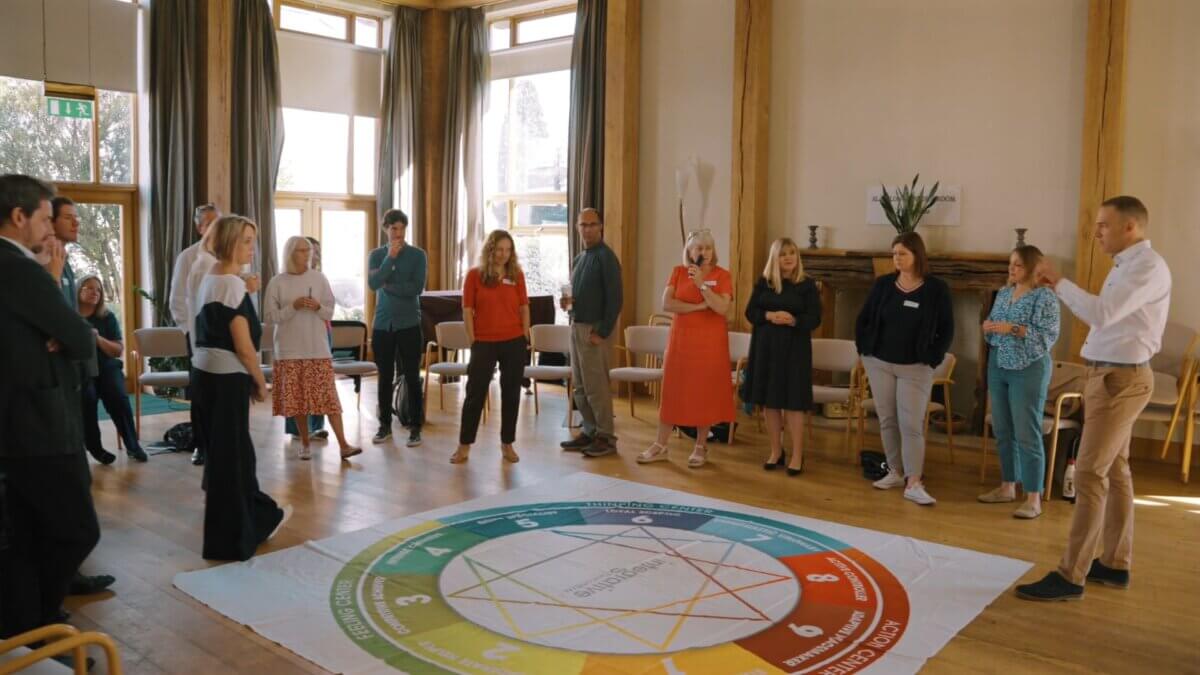
CoCreate is the UK’s largest and most experienced iEQ9 Enneagram provider for businesses.
We work with Enneagram Type 6 leaders, alongside all other types, across sectors, supporting senior leaders, teams and organisations through coaching and leadership development.
Discover our Enneagram services for business leaders and teams.
Want to continue exploring the Enneagram?
If you want to learn more about the Enneagram, each of the types or how you can harness the power of the Enneagram, here are some resources you might find useful:
If you would benefit from a coaching conversation, want to understand your Enneagram type more deeply, or are curious about how the Enneagram can accelerate team performance, get in touch.